Calluses, hyperkeratosis & cracked heels
Calluses and thickened skin are a defence reaction — the foot responding to pressure or friction. Creams soften temporarily, but while the cause remains, the callus comes back. A podologist removes the damage and helps eliminate the cause.
What we treat
- Dry calluses and thickened skin (hyperkeratosis)
- Core (root) calluses — corns
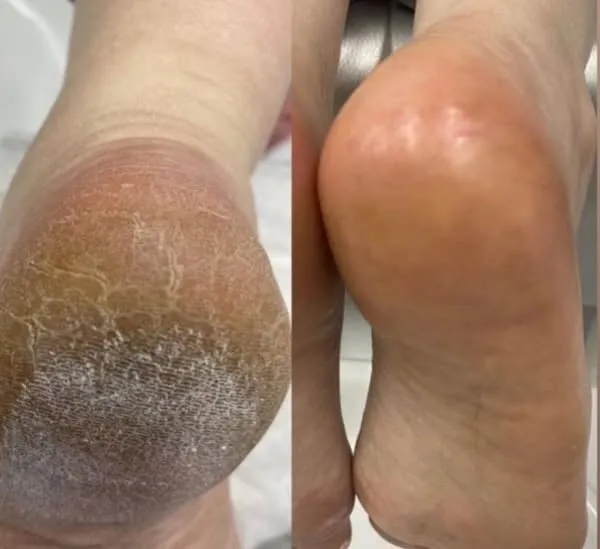
- Cracked heels — from superficial to deep and painful
- Hardened skin at pressure points
How the procedure works
Thickened skin and calluses are removed with a podiatric burr — painlessly, no blades. With a corn, the core itself is treated, otherwise it grows back.
For deep cracks, the edges are treated and the fissure is sealed with specialised products — relief is felt after the very first session.
You leave with a home-care plan: the right cream, footwear advice and, if needed, individual pressure correctors.
Why calluses come back
Tight shoes, foot deformities, flat feet, gait patterns — all create pressure at the same spot. That is why we analyse the cause, not just the consequence.
With diabetes, calluses and cracks are especially dangerous — a wound can silently develop underneath.
Frequently asked questions
Does it hurt?
No — burr-based treatment is painless. This is exactly what separates the podiatric approach from risky blade "trimming" at home or in a salon.
How many sessions will I need?
A dry callus often comes off in one visit. Deep cracks and corns may take 2–3 sessions. Addressing the cause stops the relapses.
Can I just use a pumice stone?
Surface treatment helps only briefly, and aggressive filing provokes even thicker skin. A corn cannot be removed with pumice at all.
Why do my heels crack?
Causes include dry skin, hyperkeratosis, open footwear, excess weight and endocrine conditions. At the visit we will work out the cause together.