Ingrown toenail treatment
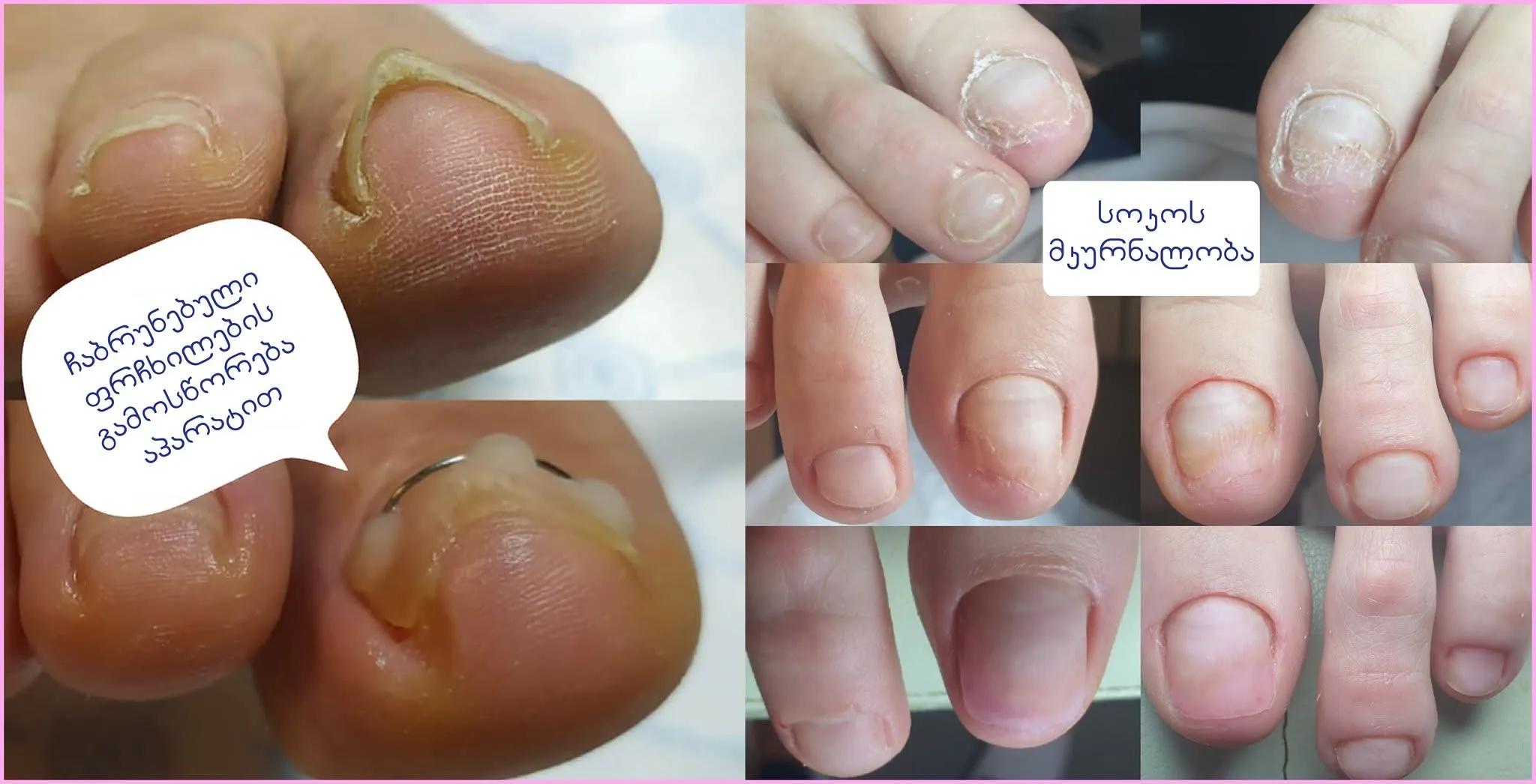
An ingrown toenail is more than a nuisance: the nail edge grows into the soft tissue, causing pain, inflammation and — left untreated — granuloma and infection. In most cases the problem is solved without surgery, using a corrective bracket system (orthonyxia).
Symptoms: when to see a podologist
With diabetes, a wound at the nail heals slowly and gets infected easily — which makes an ingrown toenail especially dangerous. Do not put off the visit.
- Pain when walking or pressing on the toe
- Redness and swelling along the nail fold
- Discharge or pus at the nail edge
- Granuloma — overgrowth of tissue
- The nail keeps growing back in after trimming
How the treatment works
The first visit starts with an examination and history: how long the problem has existed, what you have tried, and any underlying conditions.
Then the ingrown edge is treated painlessly with specialised instruments, the inflamed area is cared for and, if needed, a bracket is fitted.
Every instrument goes through staged processing: disinfection, ultrasonic cleaning and autoclave sterilisation.
Orthonyxia: how the bracket works
A thin titanium bracket or plate is fixed to the nail and gradually corrects its growth path — the edges lift and stop cutting into the soft tissue.
You can walk immediately after the procedure. Adjustments are done every few weeks.
In Natali's practice there is a case where a bracket system cancelled an already-scheduled surgery.
Why you should not put it off
Over time the inflammation deepens and infection sets in. Cutting the corner at home makes things worse — the nail grows in even deeper.
Surgery is more traumatic and often ends in relapse. Orthonyxia preserves the natural shape of the nail.
Frequently asked questions
Does it hurt?
Treating the ingrown edge and fitting a bracket is generally painless. Even with acute inflammation the discomfort is minimal, and relief is felt after the very first procedure.
How long does treatment take?
The first visit takes about an hour. The bracket is adjusted every 3–6 weeks; the full cycle is individual and usually takes a few months.
Can I treat an ingrown toenail at home?
Trimming the corner and home remedies usually make the ingrowth worse. The earlier you see a specialist, the simpler and cheaper the treatment.
Bracket or surgery?
In most cases orthonyxia is enough and surgery is not needed. Surgery remains the last resort — the bracket is painless, needs no recovery time and preserves the nail shape.
Do you treat patients with diabetes?
Yes. Diabetic foot care is a dedicated part of our practice: treatment is done with special caution and atraumatic technique.